Human Machine Interface (HMI) Software
HMI software for machine builders, OEMs and plant-floor operations
Why Choose Tatsoft for HMI?
MachineHMI is HMI software for machine builders, OEMs and plant-floor operations. It runs on a local panel or in a web browser, connects directly to PLCs through more than 100 built-in protocol drivers including OPC UA and MQTT with Sparkplug B, and logs to SQL through a built-in historian. Tags are unlimited, and every module is included in the base install.
MachineHMI is built on 100 percent managed .NET, the same foundation as FrameworX Enterprise, and shares a single designer environment with it. Build a screen once and deploy it to a local operator panel or to a remote web and mobile interface through WebAssembly. Projects are stored in one secure file with built-in versioning, so the same application can be reused across machine models and revisions and kept under change control. Scripting is C#, VB.NET and native Python 3.
What do machine builders and OEMs get?
Build one HMI template and deploy it across many machines, then customise it per customer without rebuilding it. The same project runs on a panel at the machine and in a browser for remote support, so a service engineer can diagnose equipment without installing client software. Machines participate in a Unified Namespace rather than standing alone, so a machine you ship becomes part of your customer’s plant-wide data model on the day it is commissioned. Direct PLC connectivity means no middleware between the machine and its interface.
What is included in MachineHMI?
Complete
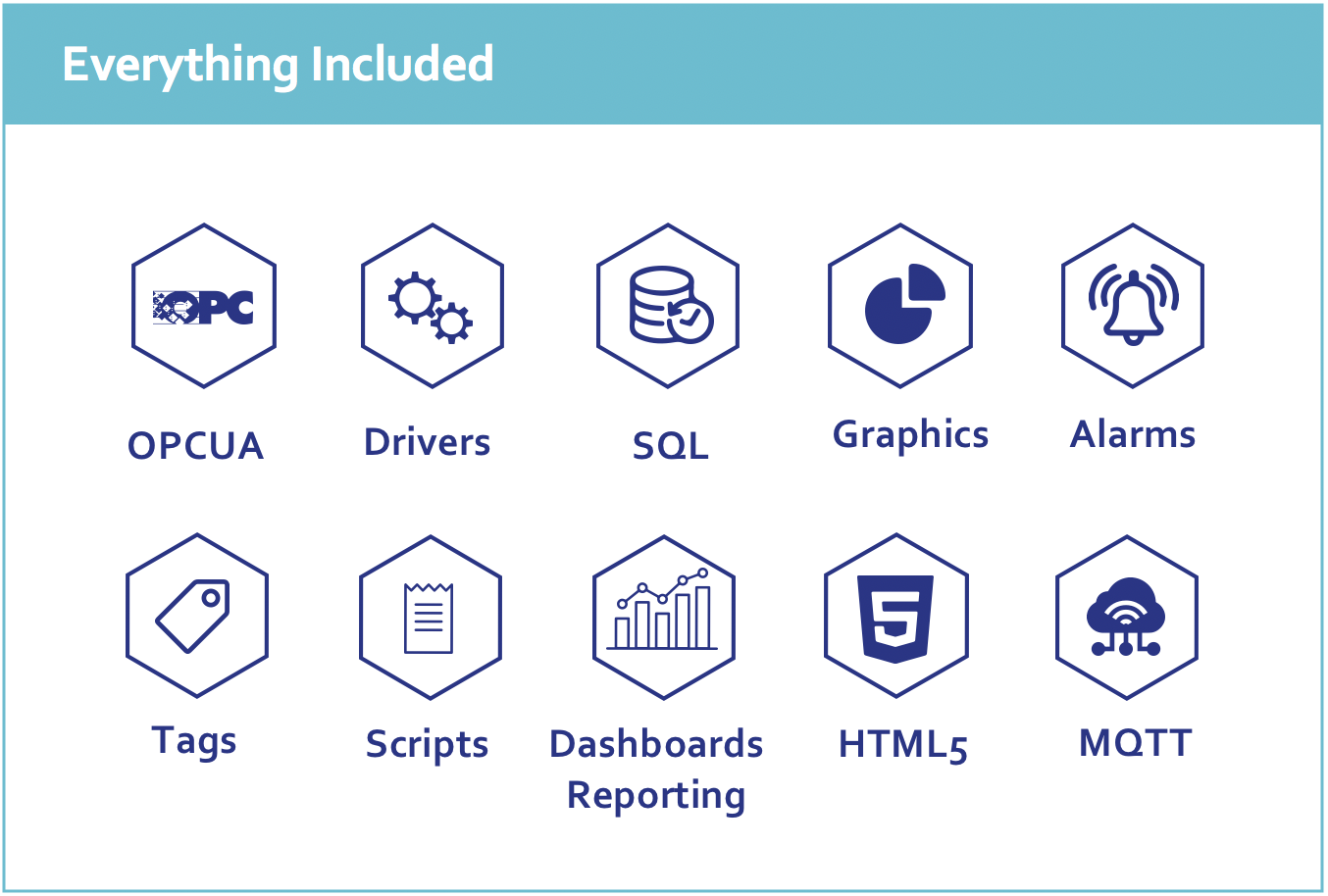
Everything you need in one install, built-in drivers, SQL, redundancy, reporting, and more.
Create Fast and Powerful
Reusable symbols and components, projects stored in one secure file, built-in versioning.
Security & Redundancy
Mission-critical HMIs, Security at the core level.
Sized to Your Application
MachineHMI is sized to your application, includes drivers, MQTT, audit trail and more.
.NET and Web
.NET means a managed runtime, memory safety, and predictable behaviour. Web means easy to deploy.
Integrate to Anything IT
ERP, MES, Quality, Maintenance, Documents, Databases.
Connected Data Hub
Edge computing, store/forward to SQL, Data Historian or IIoT.
You Choose Hardware
Windows and Linux at the machine, any browser for everything else.
Powerful Scripting
C#, VB.NET, Python, Code Editor, Create Tasks, .NET Classes.
It’s not uncommon to hear, “This is like magic,” during Tatsoft training sessions when customers are upgrading from legacy solutions. Tasks such as design or troubleshooting can be completed in just one-tenth of the time with Tatsoft compared to traditional legacy systems.
- Control System Technologies
One of the main reasons we decided to work with Tatsoft is they have decades of experience in developing software products and understand the need to have a flexible, reliable platform on which to build applications that will last a long time.
- Renifer Systems
I can’t tell you how many people have come through this building. International groups are very interested. We like showing it off. The system is a big change from what we had; everybody appreciates it.
- Cargill Feed Safety Research Center
The other packages we looked at were either extremely long in the tooth, could only communicate with a single PLC, or were lacking in data collection capabilities (…) FrameworX also provides the tools for us to make complex animations that were essential for us to separate ourselves from the competition.
- Rite Irrigation LLC
Other key factors leading to our decision to use FrameworX were the wide range of options for displaying graphics, built-in .NET scripting for special requirements, communication flexibility, and competitive pricing.
- Water and Wastewater Industries
Grab slider and move left/right to see more
Graphic Designer to build Dynamic HMIs
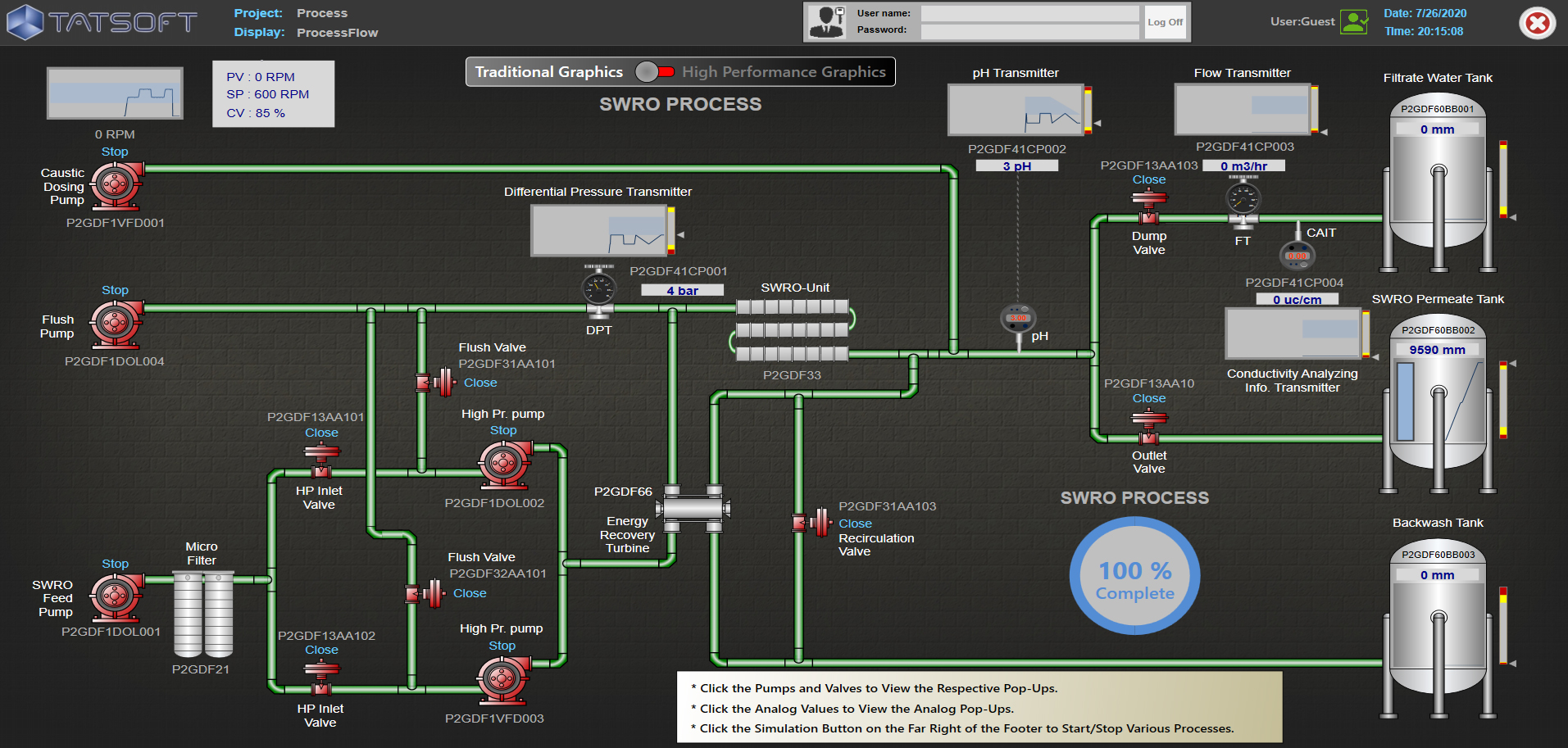
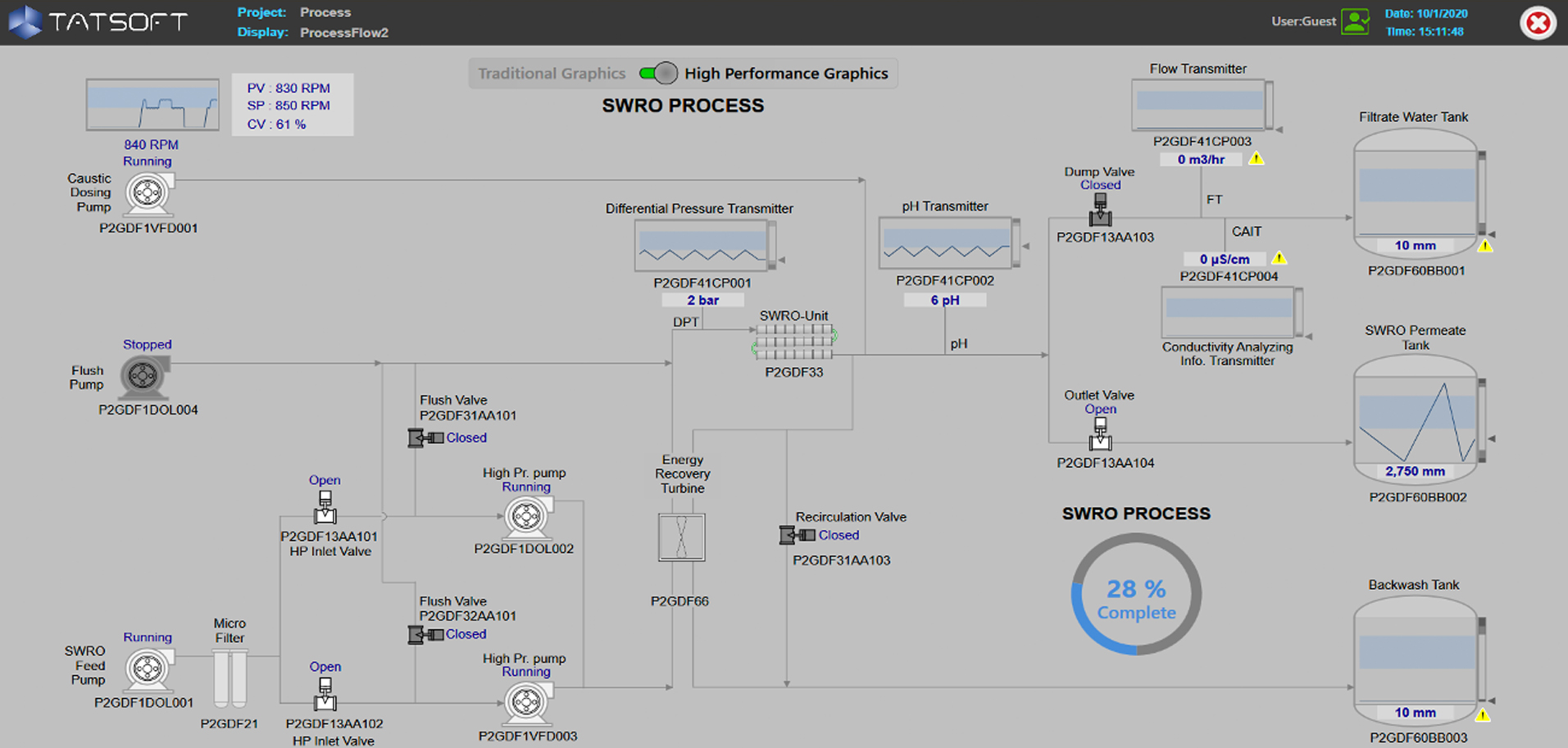
Our human machine interface software includes a complete set of tools for creating rich interactive displays for analyzing your real-time and historical data. We include a full set of symbols and components so you can easily build HMI graphics, charts, trends and alarm screens. Build or add your own symbols, we give you limitless possibilities. Dynamic Symbols are powerful ways to decrease your development time with runtime template binding and central management.
– Rich vector drawing tool or use symbols and components or import .NET or HTML5 controls
– Comes with a Dashboard designer to simplify creation of powerful data visualizations
– Code behind and expressions provide flexible customization on animations and client-side events
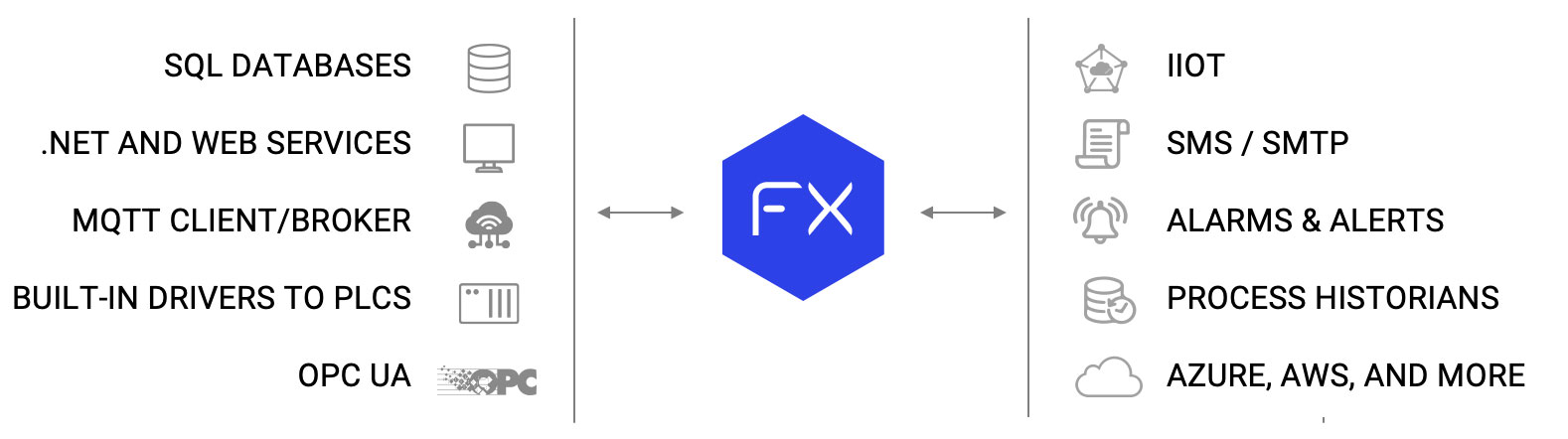
HMI Software that connects to PLCs, DCS, OPC, MQTT
More than 100 protocol drivers ship in the base install, including Rockwell, Modbus, Siemens, Omron, OPC UA, MQTT with Sparkplug B, SNMP and BACnet. There are no separate connectivity modules to buy. A driver toolkit is included for developing your own, or our team can build one.

Multi-Platform, Multi-Touch, Multi-Monitor HMIs
MachineHMI runs on Windows and Linux, from a small edge device to a large format display, and reaches any tablet or phone through a browser using the WebAssembly client. Multi-monitor support is configured rather than coded.
HMI Data Logging and Trending
Log data to the built-in SQL database or external databases, like Microsoft SQL Server, Azure or Oracle. Advanced visualization and annotation features. Log tags, alarms, events. Store and Forward to a remote database or process historian. Advanced data grid and trending tool for analyzing historical data.
- Plot logged data with any SQL data on the same chart
- Trend charts are configurable or fully customizable
- Vertical and XY charts with all properties available to scripts

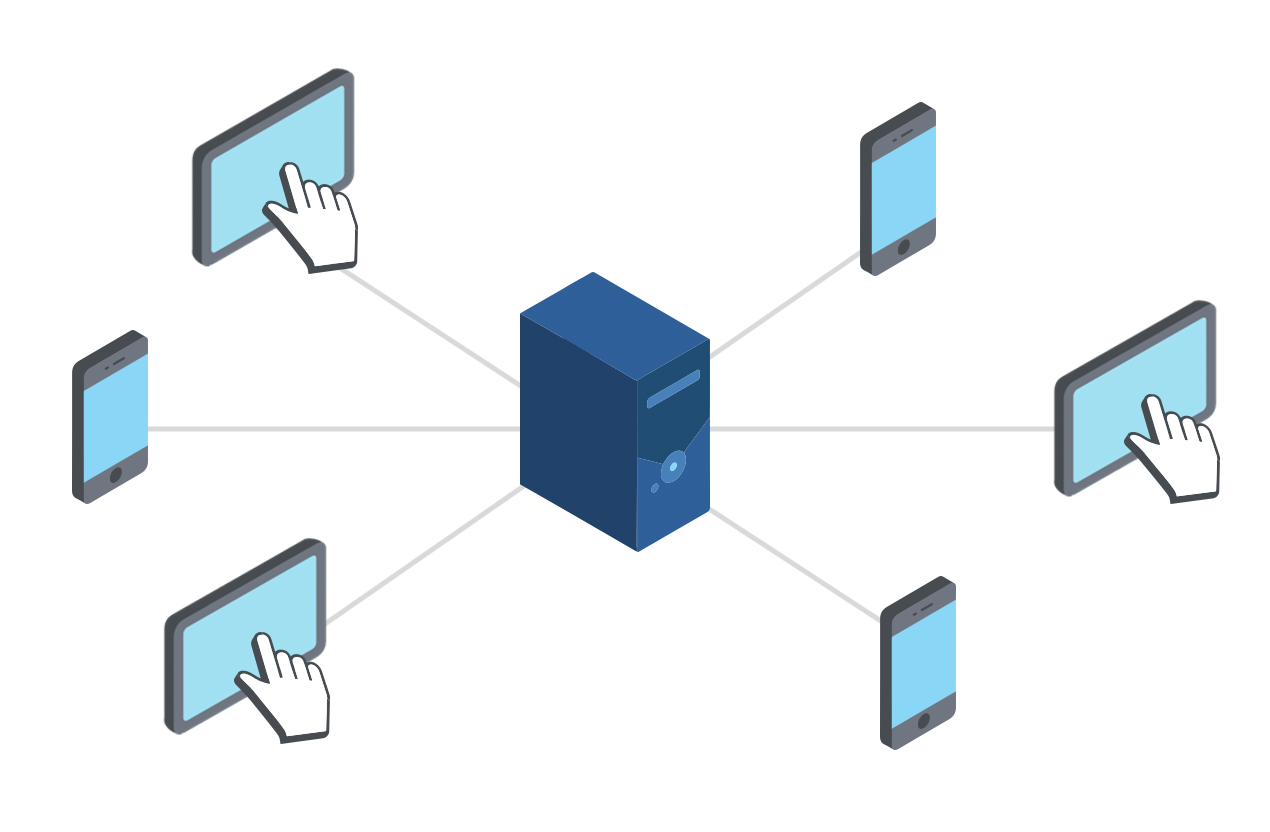
Single HMI to Server Based HMI
Of course the MachineHMI supports from one to many HMI stations. You can have stand alone to centrally managed and everything in between – Open and Flexible. Centrally managed for applications that require plant or enterprise wide development, standardization, deployment and maintenance.
Thin and Remote Access and Control
Full secure access if enabled. Access your remote HMI or network of HMIs, our Tatsoft Web Client can be used to develop virtual views with full graphics. Ideal for isolated facilities or HMI stations and you can interact with the site without physically visiting. Full access includes the development environment.
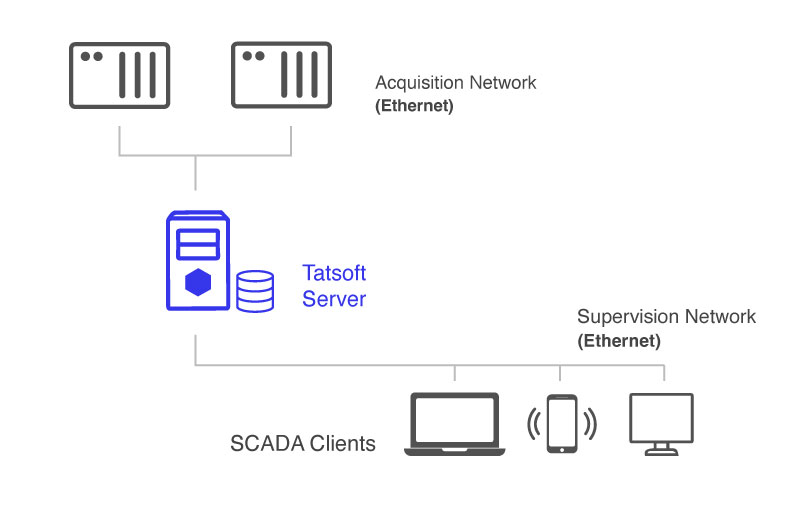
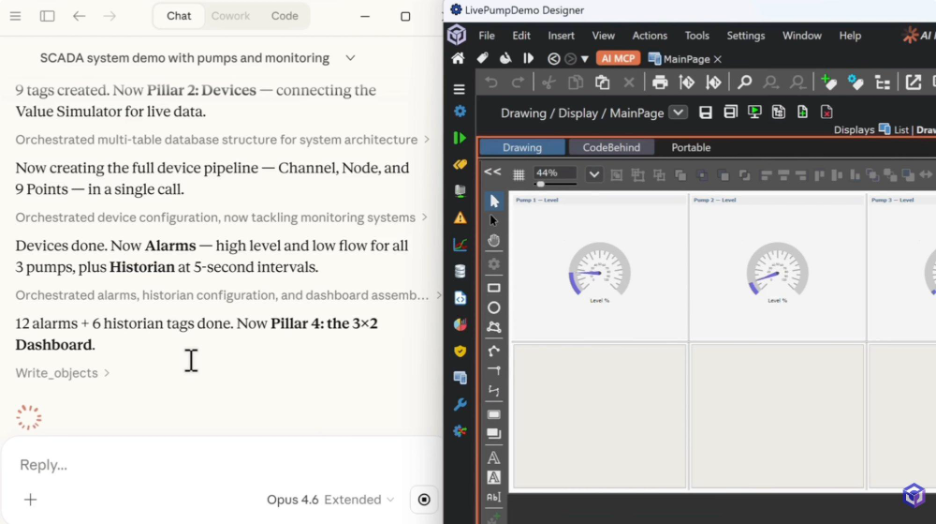
How does AI reach the machine?
MachineHMI exposes Model Context Protocol servers, so an AI agent reads and acts on the running application through a defined interface rather than through a bolted-on connector. Python 3 and ML.NET run analytics at the machine itself, on the same runtime that drives the screens. Machines participate in a Unified Namespace, so a machine you ship becomes part of your customer’s plant-wide data model on the day it is commissioned.
MachineHMI: Modern Human Machine Interface Software
Alarms and Notification
Multi-threaded alarming, log to SQL, scripts subscribe to events.
Built-In Drivers
Major PLC, OPC UA, MQTT drivers included. Toolkit for any protocol.
Dashboard Builder
Build dashboards and connect to data as part of your HMI.
Built-In SQL
Embedded SQL engine included or integrate to any SQL.
SQL Historian
Use built-in SQL or log to any Process Historian or Cloud Base Data Source.
SQL Data Logging
Comes with HMI just configure tag to log, rate or on event and go.
Secure
Implemented at the core of the platform, stable and secure.
Audit Trail Anything
Log events, you choose events to log to SQL and displayed in Audit window.
Symbols and Components
Tag, asset, template based, reusable components.
Robust and Fast
.NET to the core, Fast and Flexible Graphics.
Scripting
Code behind and expressions using VB.NET, C#, HTML5/ Javascript and Python.
Universal Connectivity
Secure connectivity included, build server or cloud connected HMIs.
Complete & Multi-Platform
Everything you need to build next gen HMIs, run on Windows or Linux.
Licensing by Edition
MachineHMI is sized for machine-level applications, with all modules included.
Redundancy
Server, device communications easily configured for redundancy.
FAQ
HMI software (Human Machine Interface software) is the layer that allows operators and engineers to visualize, monitor, and control industrial systems in real time. It converts complex machine data into intuitive graphics and dashboards. In industrial automation, HMI software improves situational awareness, reduces downtime, and enhances productivity by making data accessible and actionable. Tatsoft’s HMI solutions go beyond visualization. They are built on a modern .NET framework that integrates with SCADA, MES, and IIoT applications within a single platform.
HMI software connects to industrial controllers, PLCs, and sensors to gather and display process data. Operators interact through screens, panels, or mobile devices to control and monitor equipment. Tatsoft HMI software (MachineHMI) connects natively to a wide range of devices and protocols, including Modbus, OPC UA, MQTT, and REST APIs — enabling secure connectivity from the edge to the enterprise. This flexibility ensures that engineers can design and deploy responsive interfaces across PCs, embedded devices, and web or mobile clients.
An HMI covers one machine or one area and is what the operator stands in front of. A SCADA system supervises many machines or sites and centralises their data, history and alarms. HMI is about interaction at the point of work. SCADA is about supervision and coordination across the plant. FrameworX provides both from one platform and one data model.
Modern human-machine interface software offers advanced visualization, multi-platform access, and seamless integration with industrial data systems. Key features include real-time data trending, alarm management, scripting in Python, and scalable architectures for distributed environments. Tatsoft’s FrameworX platform adds unified namespace integration, .NET-based performance, and built-in redundancy, giving users the flexibility to design anything from a simple operator panel to a full enterprise HMI/SCADA system.
When choosing HMI software, companies should evaluate compatibility with existing PLCs and protocols, scalability for future expansion, and the ease of creating and maintaining graphical displays. Support, licensing flexibility, and security compliance are also essential. Tatsoft HMI software is designed to scale from single-machine HMIs to enterprise-wide visualization systems, all within the same platform. Its unified development environment simplifies configuration, while Tatsoft’s technical team provides expert guidance through deployment and lifecycle management.
Security is critical for any HMI software used in industrial control systems. Key measures include user authentication, role-based access, data encryption, and secure communication with PLCs and field devices. Tatsoft implements industry-standard cybersecurity practices, supporting Windows authentication, TLS encryption, and redundant communication paths. Built on modern Microsoft .NET technology, Tatsoft HMI software ensures compliance with IT security standards and reliable operation across distributed environments.
Yes. FrameworX uses a single designer for all deployment targets, and WebAssembly delivers the same displays to a browser with native-like performance. A project built once runs on a desktop client, in a web browser and on mobile devices without a rewrite, a separate mobile project or a plugin.
Yes. MachineHMI exposes MCP servers, so an AI agent can read and act on the running application through a defined interface.
MachineHMI is sized for machine-level applications and supports five concurrent clients, covering operator panels and supervisory access. Tags are unlimited. For plant-wide deployment with unlimited clients, the edition is FrameworX Enterprise.
Migrating to Tatsoft HMI software is straightforward thanks to the platform’s flexible architecture and conversion tools. Tatsoft provides import utilities for tags, screens, and scripts from legacy HMI or SCADA systems, significantly reducing redevelopment time. Because FrameworX supports standard protocols like OPC UA, MQTT, and Modbus, existing device connections can be reused without major reconfiguration. Tatsoft’s engineering team also offers migration support to ensure a smooth transition and immediate productivity gains with a modern, unified interface.
Unlike traditional HMIs that focus only on local visualization, Tatsoft HMI software is part of the full FrameworX platform, unifying HMI, SCADA, MES, and IIoT capabilities in a single environment. Built on .NET, it delivers high performance, cross-platform deployment, and unlimited scalability. Tatsoft eliminates the need for multiple software layers by combining real-time data acquisition, logic processing, and visualization, giving users a true modern SCADA and HMI foundation.
Tatsoft HMI software supports seamless connectivity with existing automation infrastructure. It communicates directly with PLCs, sensors, and industrial devices using drivers for Allen-Bradley, Siemens, Modbus, OPC UA, MQTT, and others. Integration is configured graphically, without complex scripting, allowing engineers to quickly connect real-time data streams to dashboards and alarms. This interoperability makes Tatsoft ideal for brownfield upgrades and mixed-technology environments.
Tatsoft HMI software is used across multiple industries including manufacturing, energy, water treatment, building automation, and OEM machine control. Its flexibility and open architecture make it suitable for discrete, batch, and continuous processes. OEMs and system integrators embed Tatsoft HMIs into their equipment, while enterprises deploy it for plantwide operations, leveraging the same platform for visualization, SCADA, and MES integration.
Yes. FrameworX runs locally at the machine and continues to operate, log and alarm while a network link is unavailable. Data collected during the outage is stored and forwarded to the historian or to a central server when the connection returns, so the historical record has no gap.
Tatsoft licenses FrameworX by edition, not by screen or by tag. MachineHMI is sized for machine-level applications, with all modules included: drivers, MQTT, audit trail, alarms, trending and reporting. Tags are unlimited and the edition covers five concurrent clients. Plant-wide deployment with unlimited clients is FrameworX Enterprise, and OEM and embedded licensing is available for machine builders.
Yes. It is embedded by OEMs in packaging, robotics and machine tools, and in process equipment across food and beverage and pharmaceutical production. OEM and embedded licensing is available for machine builders.
Yes. MachineHMI publishes through MQTT with Sparkplug B and participates in a Unified Namespace as an edge node, so machine data is contextualised and available plant-wide without a separate gateway.
Yes. FactoryStudio 8 and 9 projects upgrade to FrameworX 10.1, and every 10.1 minor release is solution-compatible with the ones before it. Opening an older solution upgrades the file in place and keeps the pre-upgrade file as an automatic backup, and the UpgradeSolution command-line tool runs the same upgrade unattended for scripted rollouts. Version 10.1.5 installs alongside 10.1.4 rather than replacing it, so the previous version stays available during a cutover.
Displays and scripts are rebuilt rather than converted, which is normal when moving between platforms from different vendors. What carries across without rework is the field layer: FrameworX connects to the same controllers through more than 100 native drivers plus OPC UA, Modbus and MQTT with Sparkplug B, so device communications are reconfigured rather than replaced. Tag structures can be imported from a spreadsheet export, and the two systems can run in parallel against the same controllers during validation.